English
 KR
 IA
 JP

Metal bending is one of the most essential processes in modern fabrication. From structural frameworks to architectural elements, bending transforms flat metal sheets and straight pipes into functional components used across construction, engineering, and industrial projects.
What is Metal Bending?
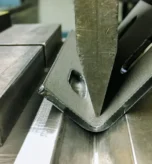
Metal bending is a fabrication process where force is applied to metal sheets, plates, bars, or tubes to form angles, curves, or custom shapes. This is typically performed using press brakes, hydraulic bending machines, and pipe bending equipment to ensure precise and uniform results.
Types of Bending Processes
1. Press Brake Bending
Used for sheets and plates to create accurate angles and folds required in structural fabrication.
2. Pipe & Tube Bending
Shapes pipes into smooth curves for handrails, frames, and industrial piping systems.
3. Roll Bending
Forms cylindrical or curved profiles for tanks, silos, and circular structures.
Importance in Structural Projects
Metal bending plays a vital role in:
Building frameworks
Support brackets
Steel enclosures
Staircases & railings
Industrial structures
Equipment housing
Without bending, fabrication would be limited to flat components, reducing structural strength and design flexibility.
Benefits of Precision Bending
Strength Retention
Proper bending maintains the metal’s structural integrity without cracking or weakening.
Design Flexibility
Allows creation of custom shapes for both functional and decorative purposes.
Assembly Efficiency
Pre-bent components fit perfectly, reducing welding time and installation errors.
Cost Savings
Accurate bending minimizes material waste and rework.
Modern Technology in Bending
Advanced CNC press brakes and hydraulic bending machines now allow fabricators to achieve micron-level accuracy. Digital measurements ensure repeatability, making bending reliable for both bulk production and custom fabrication.
Conclusion
Metal bending is more than just shaping metal — it’s a critical step in building strong, functional, and aesthetically refined structures. With modern machinery and skilled expertise, bending continues to support the evolving demands of construction and industrial fabrication.